Stage 1 of 5 — 3 Steps
Yarn Preparation
The foundation of every quality fabric
Before a single thread enters the loom, the yarn undergoes three critical preparation stages — winding, twisting, and steaming. This section sets the tension, strength and consistency that determines the quality of every metre we produce.
Yarn Winding
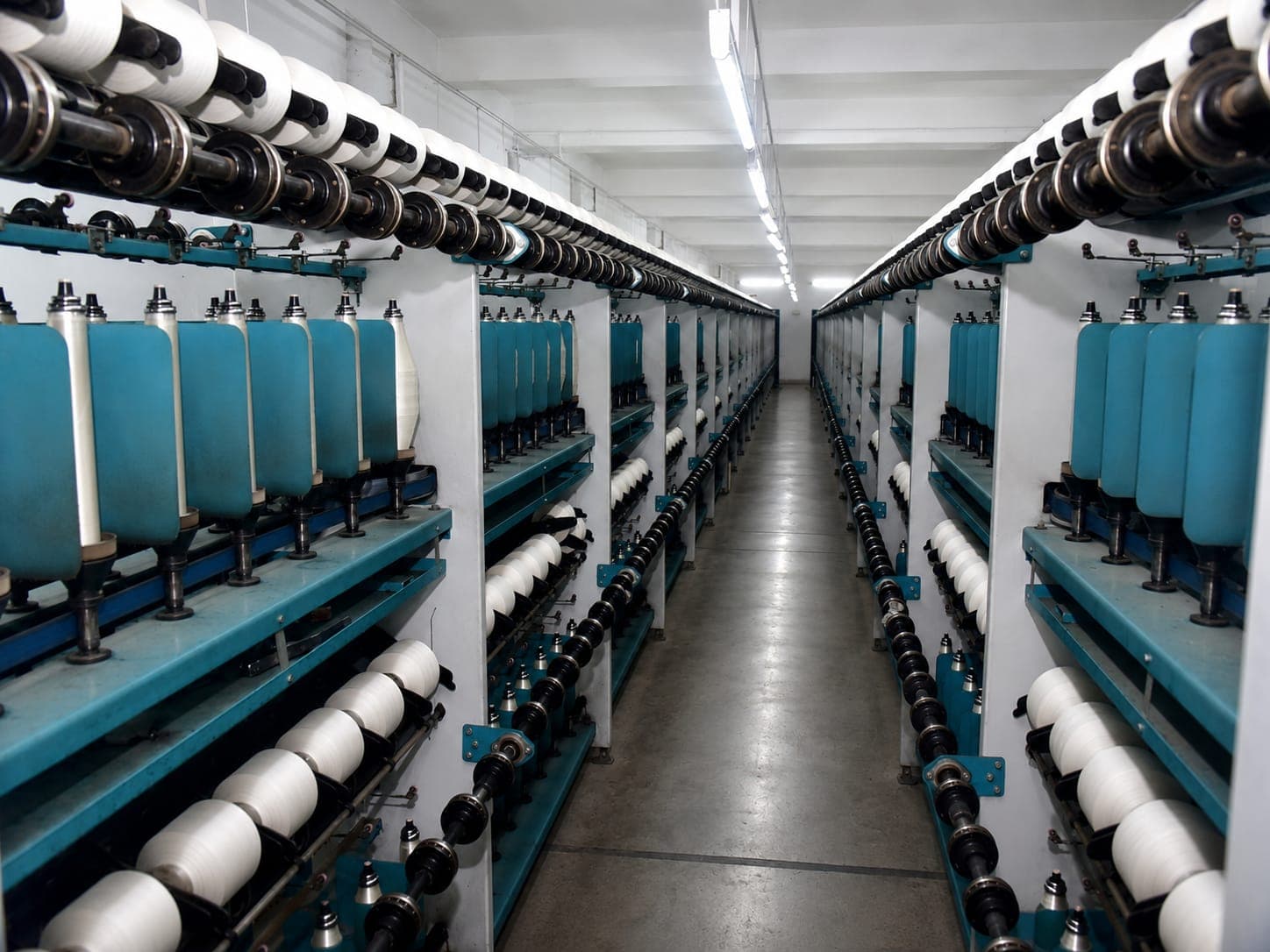
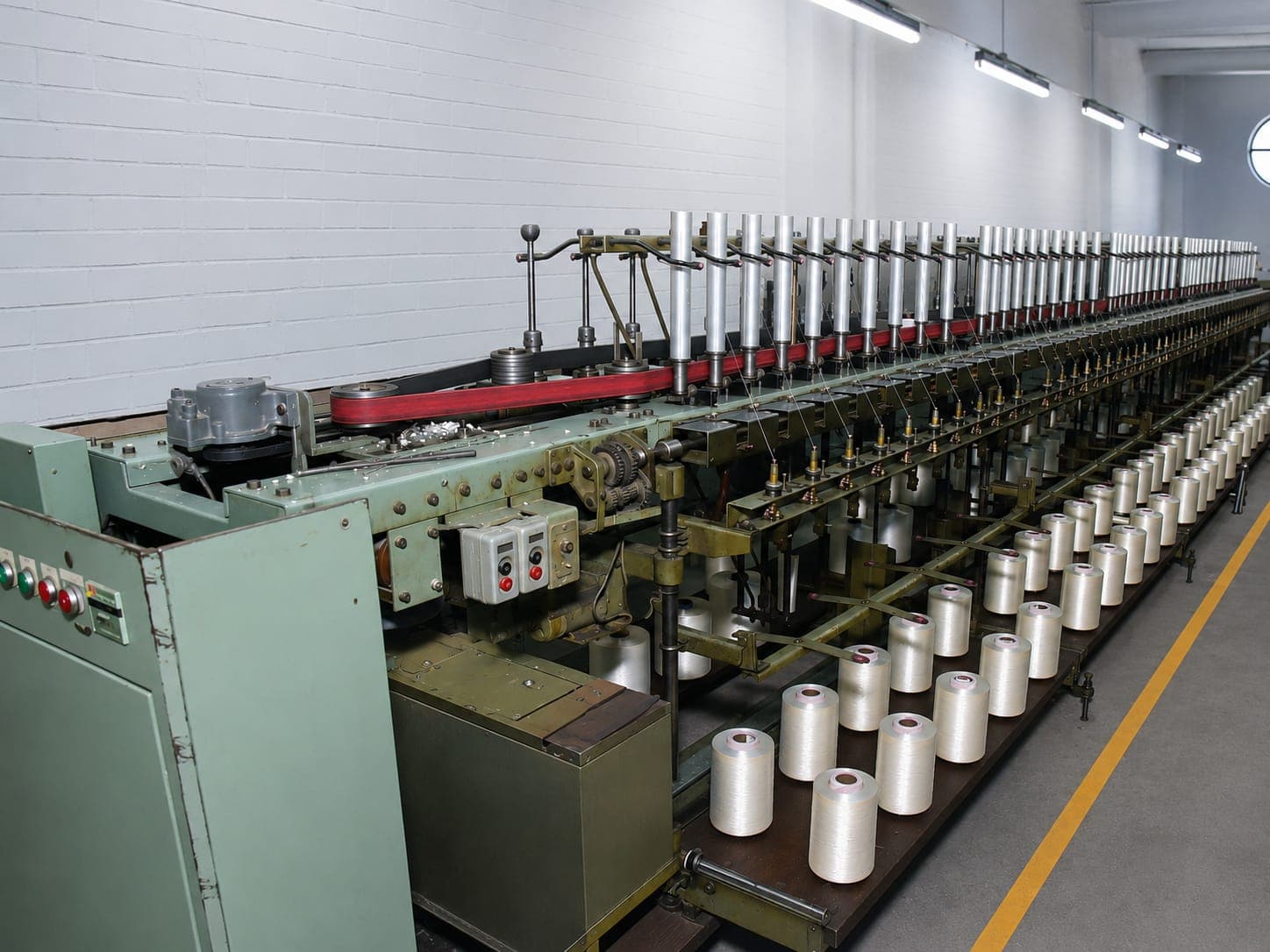
Raw yarn is first wound onto cones to prepare it for smooth fabric production. This step helps maintain balanced tension, clean yarn flow, and better quality during the next manufacturing stages.
Technical Execution
Yarn winding ensures that the raw material is transferred onto production-grade cones at a controlled speed and tension. Inconsistent winding leads to uneven weaving — so this stage is monitored carefully to ensure each cone is wound to a uniform weight and density. Our winding machines handle multiple yarn types with precision.
Yarn Twisting
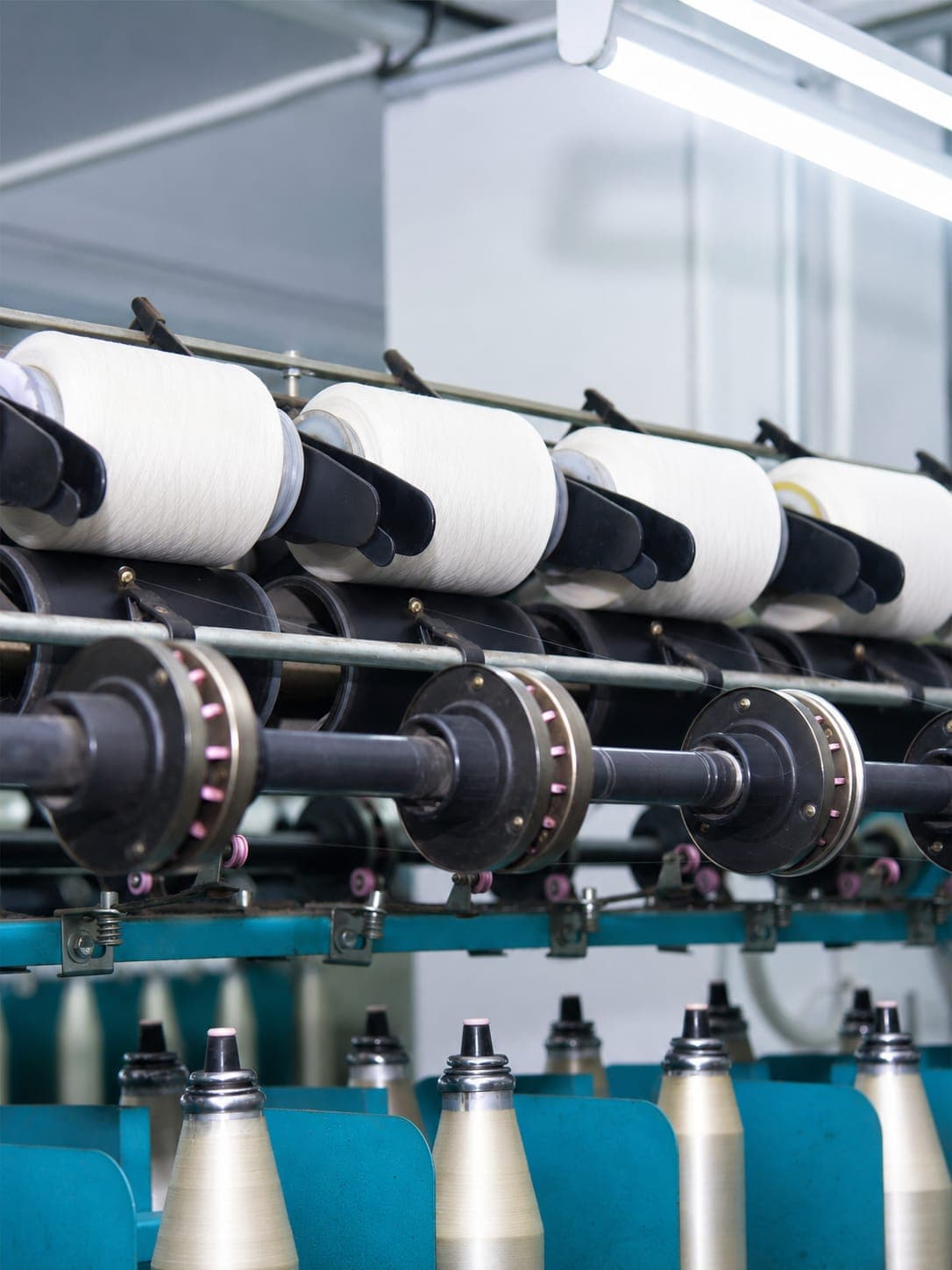
After winding, yarn is twisted to improve strength, smoothness, and durability. Proper twisting reduces thread breakage and prepares the yarn for stable weaving.
Technical Execution
Twisting imparts the structural integrity that silk yarn needs to withstand the mechanical tension of weaving. We control the TPI (twists per inch) precisely — lighter fabrics like chiffon require a higher twist, while heavier base fabrics need a lower, more relaxed twist. The twisting machines run in parallel rows to maintain consistent output across all batches.
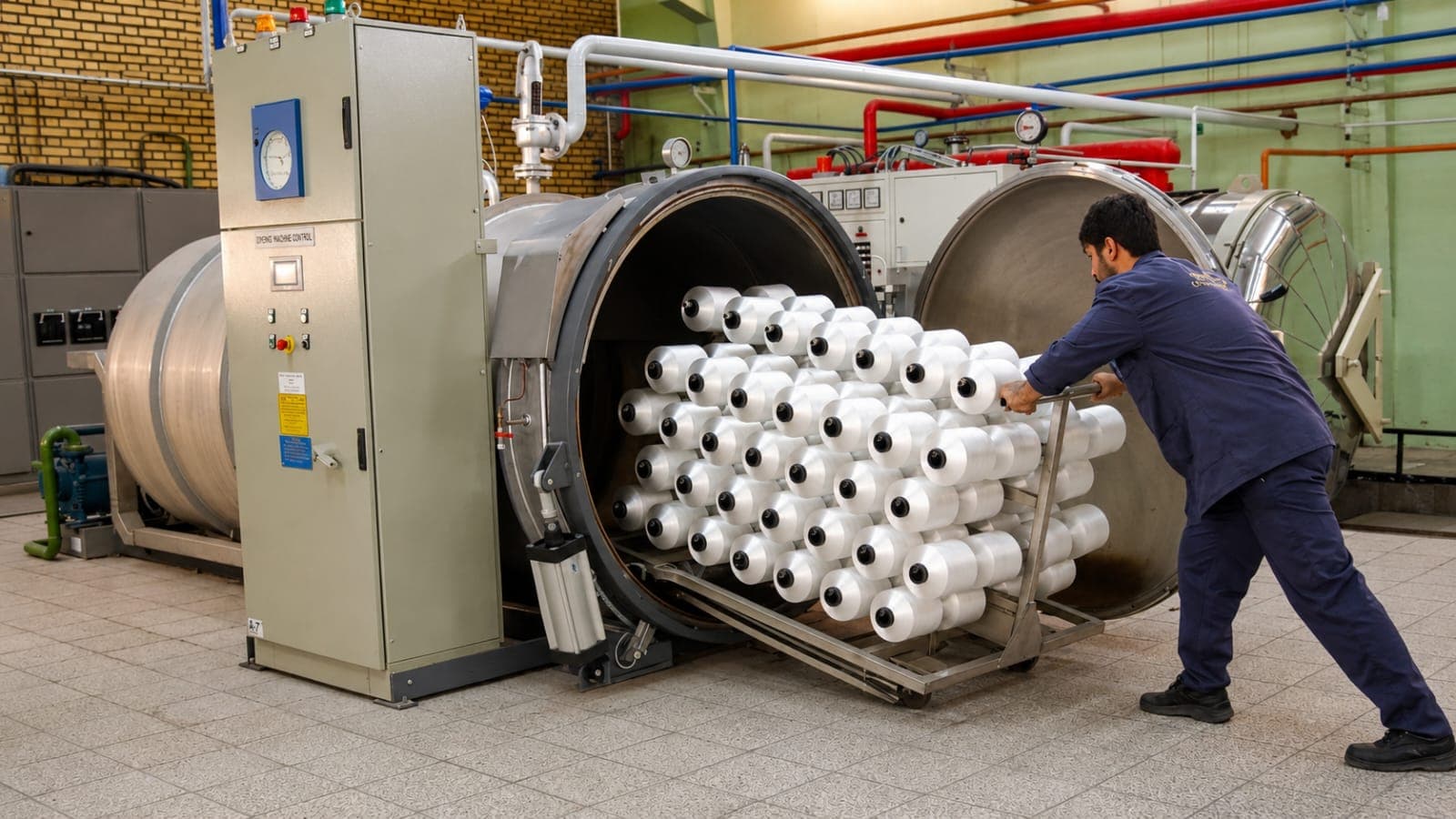
Yarn Steaming
The twisted yarn is steamed to set the twist and balance the yarn tension. This process improves softness, stability, and smooth running during weaving.
Technical Execution
Steam setting is a critical — and often overlooked — step. Without it, twisted yarn retains internal stress that causes uneven fabric texture and loom problems. Our steaming chambers apply controlled heat and moisture to relax and lock the twist permanently. The result is stable, smooth yarn that feeds consistently into the loom without curling or breaking.
Have questions about our production process?
Our team can walk you through any stage and share samples from that step.