
Stage 2 of 5 — 2 Steps
Weaving Preparation
Precision setup for every fabric structure
With yarn prepared, the next stage organises the threads into the exact arrangement required by the fabric specification. Warping and reed drawing are precision-critical — errors here affect the width, weave density and surface appearance of the finished fabric.
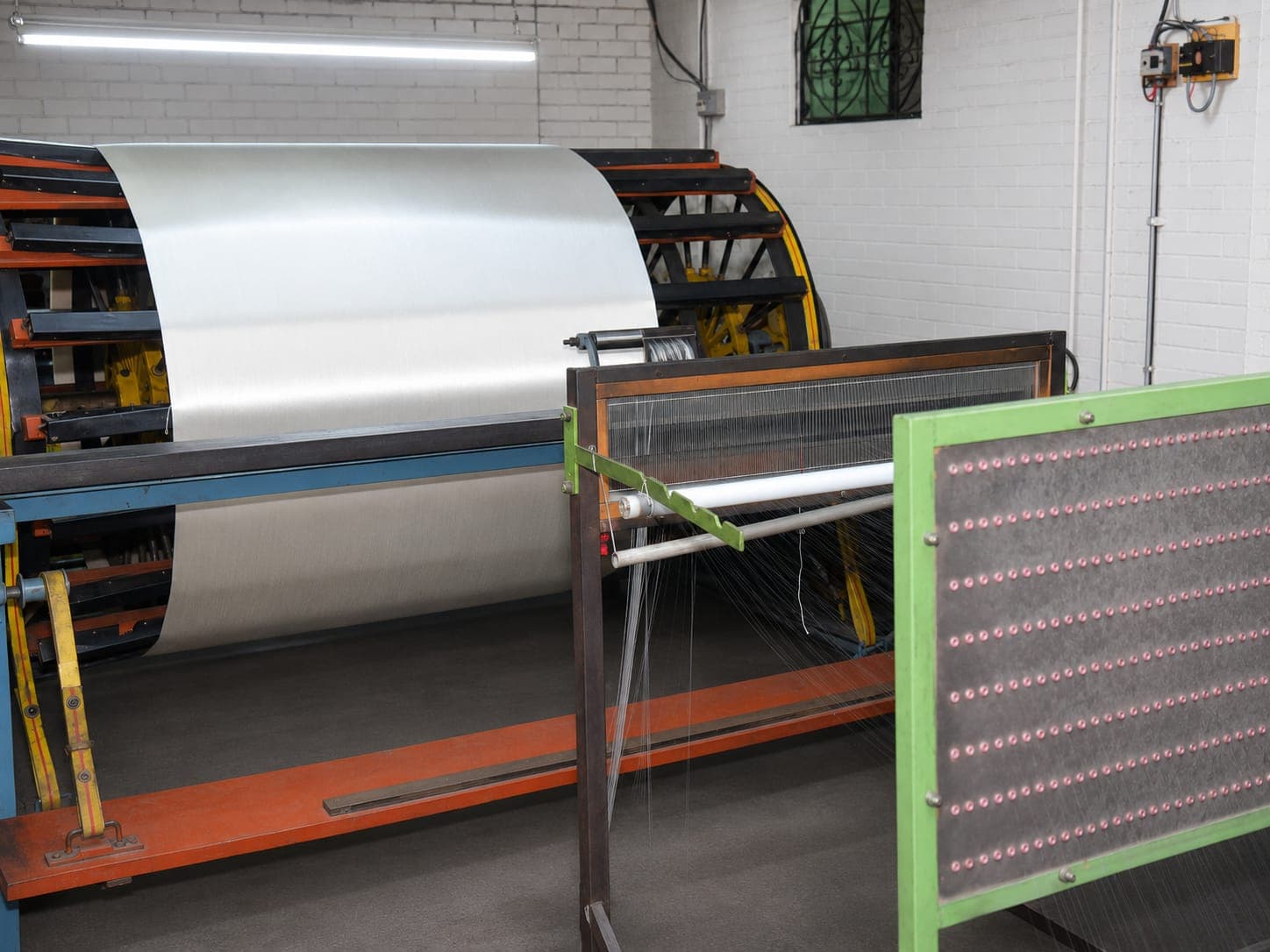
Warping & Bobbin Preparation
After steaming, yarn is divided for two important processes. Some yarn is prepared as warp, while some is wound onto bobbins for shuttle weaving.
Technical Execution
Warping involves winding hundreds of parallel threads onto a beam at the exact length and tension required for the production run. Simultaneously, weft yarn is wound onto shuttles and bobbins. The warp beam dictates the fabric length; the weft determines its texture and weight. Our warping machines run at controlled speeds with automatic tension monitoring to ensure every thread in the beam is identical.
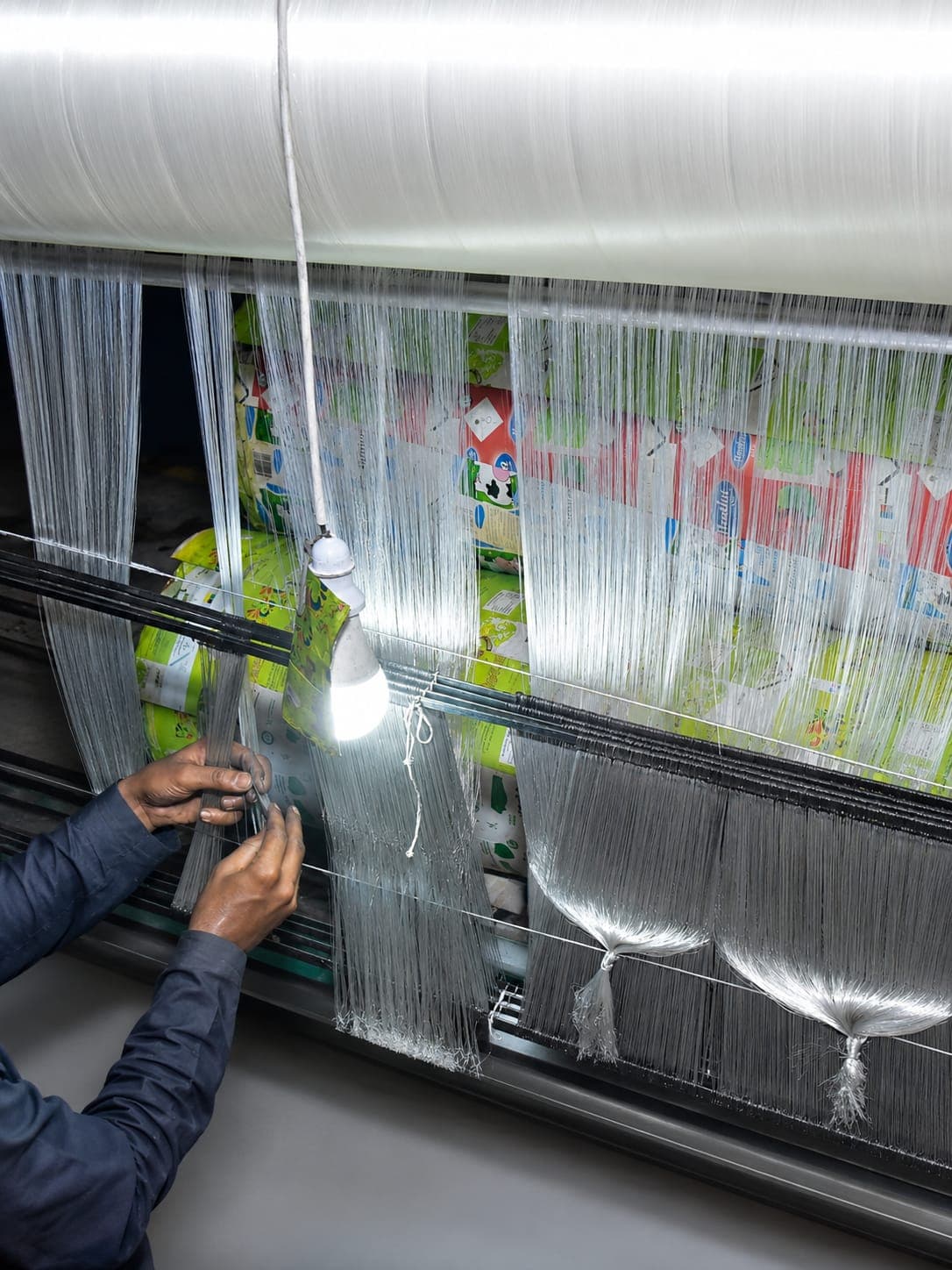
Reed Drawing
The warp yarn is carefully passed through the reed/comb in proper sequence. This step helps maintain correct thread spacing, fabric width, and smooth weaving.
Technical Execution
Reed drawing — or denting — is entirely a manual skill operation. Each warp thread is individually threaded through the reed heddles in the exact sequence specified by the weave pattern. The number of threads per dent determines the fabric's pick density and width. A single threading error affects a visible streak across the entire production run. Our experienced drawers handle this process with extreme care, checking and re-checking before the loom is started.
Have questions about our production process?
Our team can walk you through any stage and share samples from that step.