Our Production Process
12 carefully monitored steps across 5 production stages — every metre of fabric is produced and checked under one roof.
Yarn Preparation
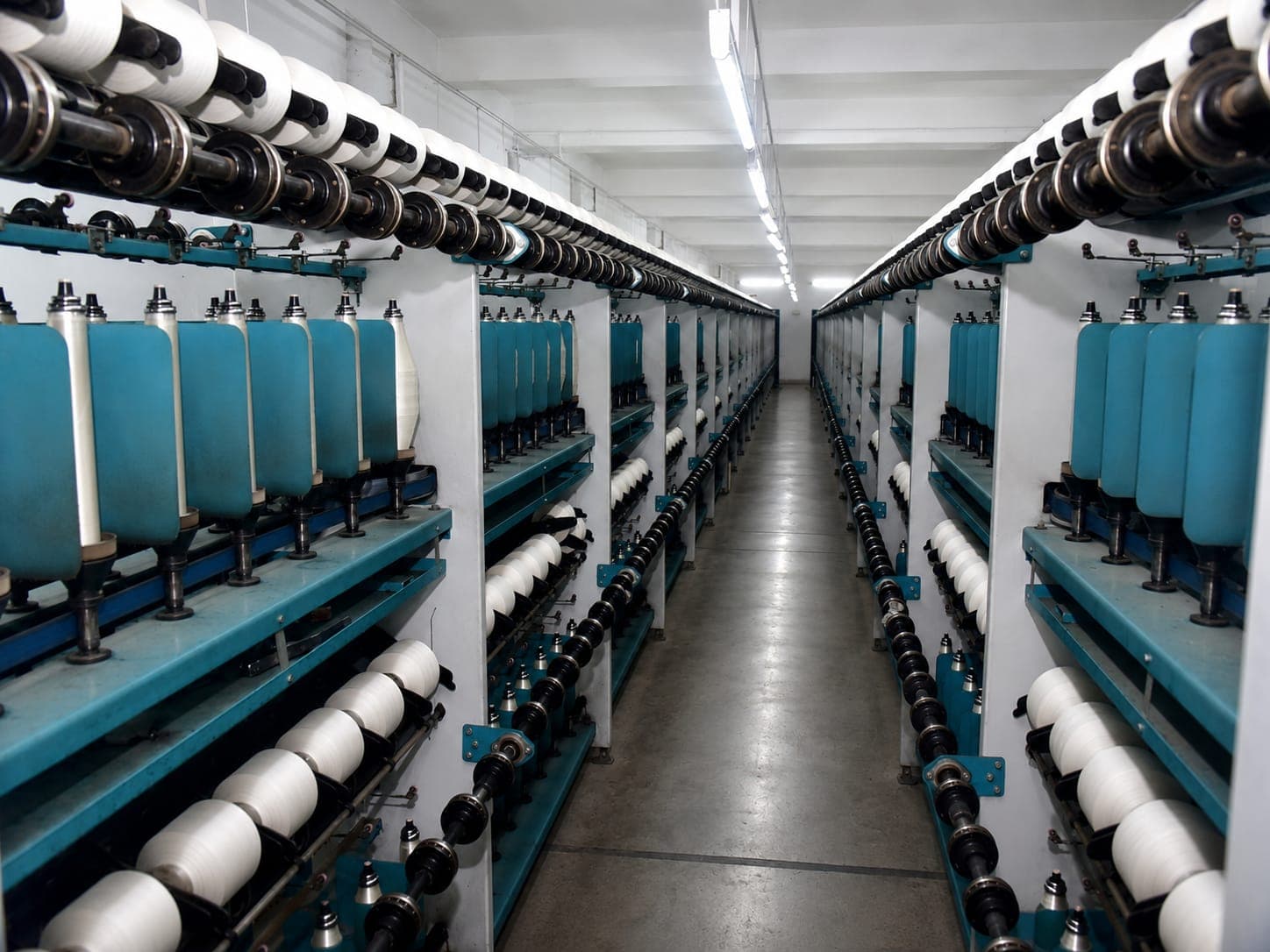
Yarn Winding
Raw yarn is first wound onto cones to prepare it for smooth fabric production. This step helps maintain balanced tension, clean yarn flow, and better quality during the next manufacturing stages.
Yarn Twisting
After winding, yarn is twisted to improve strength, smoothness, and durability. Proper twisting reduces thread breakage and prepares the yarn for stable weaving.
Yarn Steaming
The twisted yarn is steamed to set the twist and balance the yarn tension. This process improves softness, stability, and smooth running during weaving.
Weaving Preparation
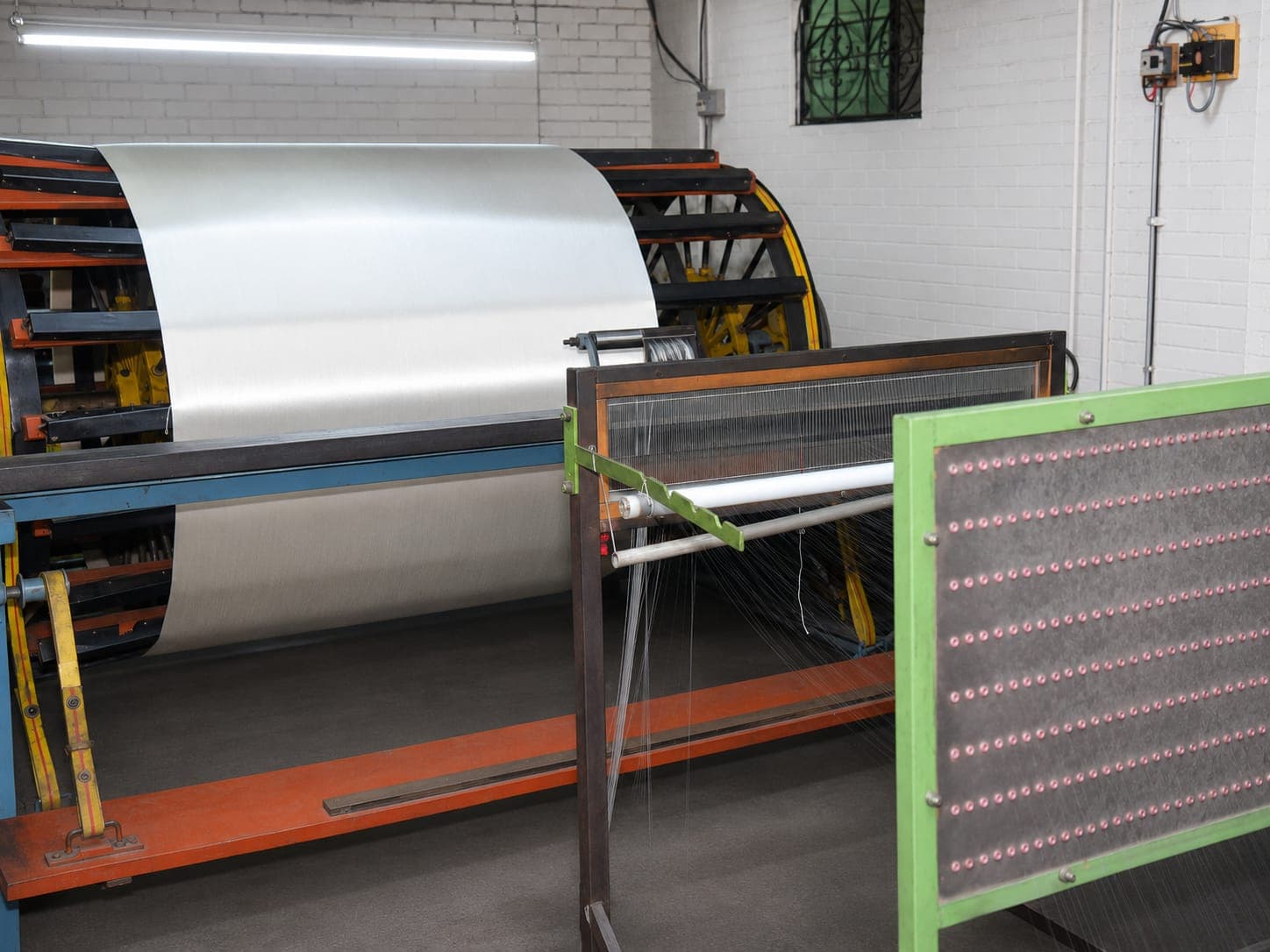
Warping & Bobbin Preparation
After steaming, yarn is divided for two important processes. Some yarn is prepared as warp, while some is wound onto bobbins for shuttle weaving.
Reed Drawing
The warp yarn is carefully passed through the reed/comb in proper sequence. This step helps maintain correct thread spacing, fabric width, and smooth weaving.
Fabric Weaving
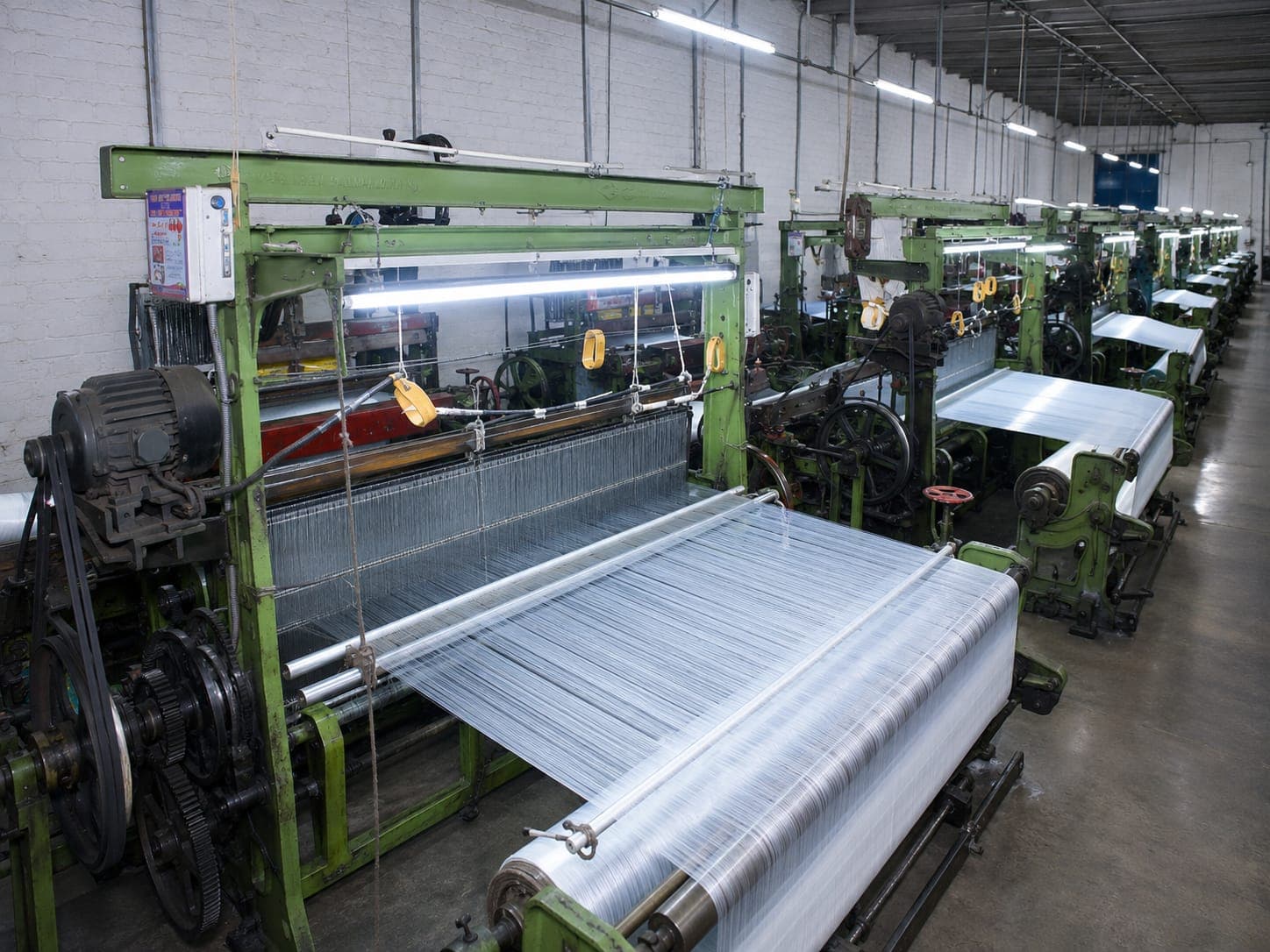
Power Loom Weaving
The prepared yarn is set on power loom machines, where warp and weft threads are interlaced to create the fabric. This is the main stage where the fabric structure is formed.
Checking & Finishing
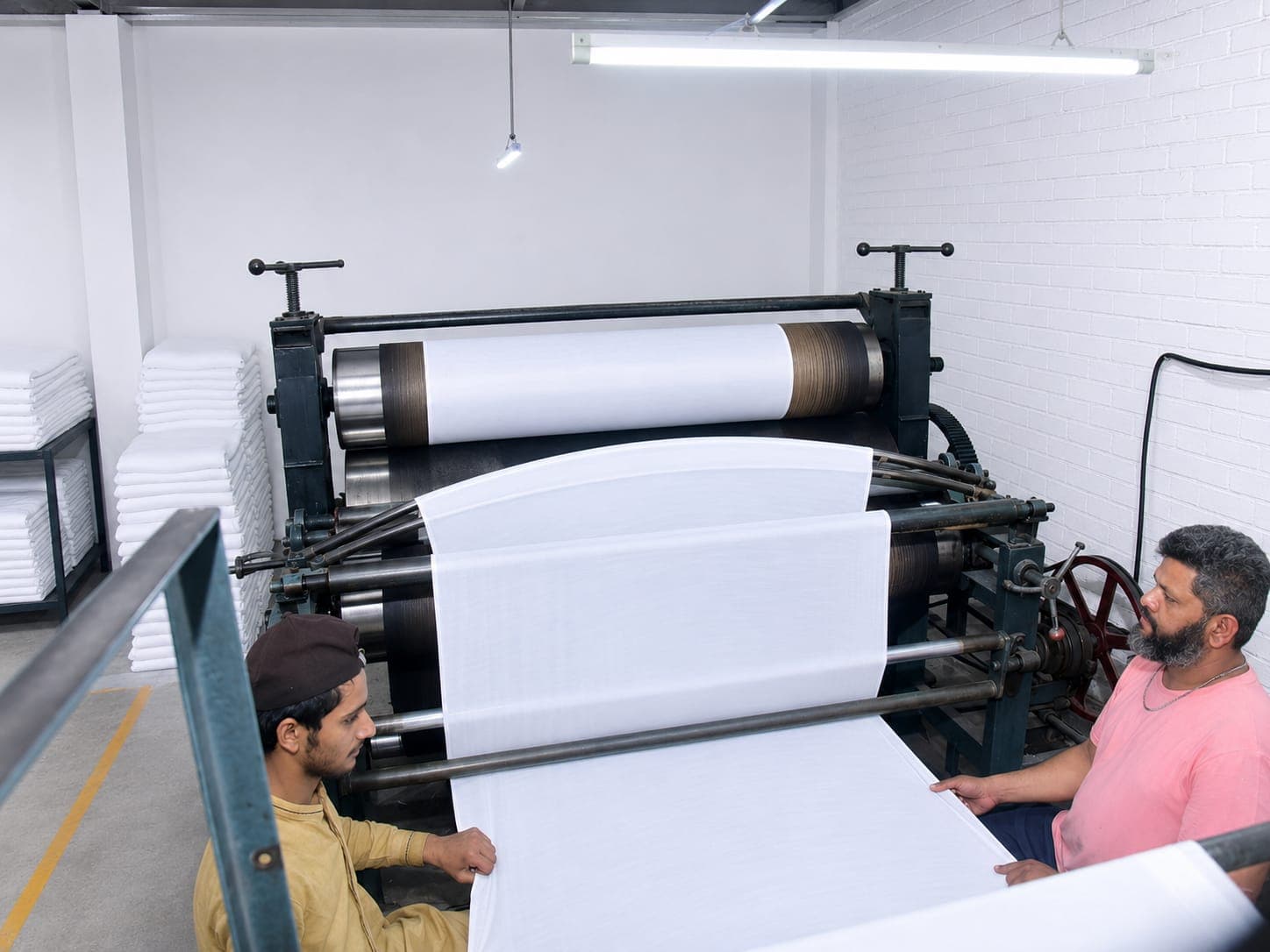
Fabric Checking
After weaving, the fabric is carefully checked for surface quality, weaving faults, stains, holes, thread lines, and finishing. This ensures clean and production-ready fabric.
Fabric Washing
The checked fabric is washed to remove dust, oil marks, impurities, and processing particles. Washing improves fabric cleanliness, softness, and overall feel.
Fabric Calendering
After washing, fabric is passed through calendering rollers to improve smoothness, fall, surface finish, and overall appearance.
Measuring, Packing & Dispatch
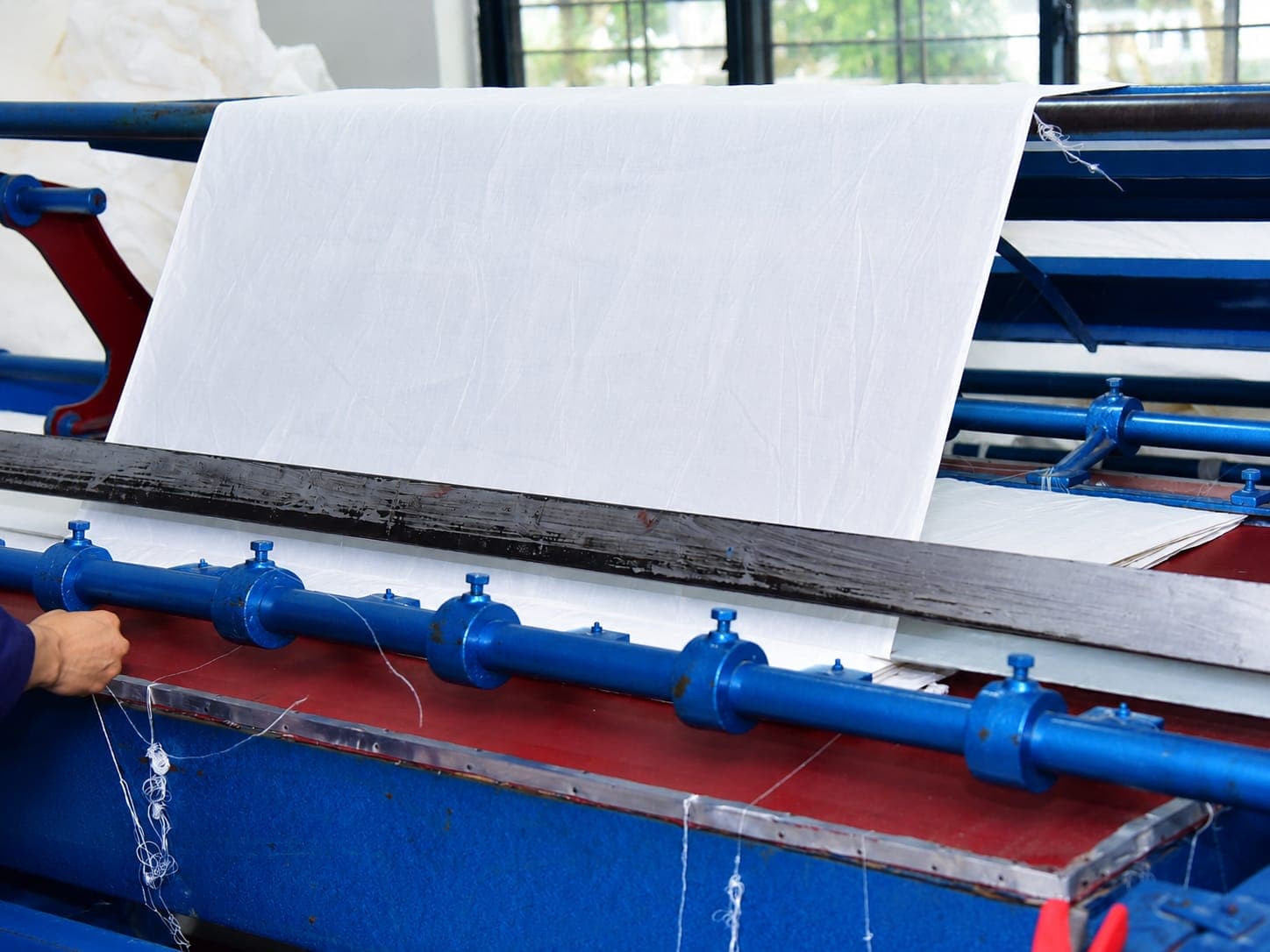
Fabric Measuring
After calendering, the fabric is measured carefully to confirm accurate length and width before packing.
Fabric Packing
The measured fabric is properly packed with protective wrapping to keep it clean, safe, and ready for delivery.
Fabric Dispatch
After packing, the fabric is dispatched according to customer order details. Each order is handled carefully to ensure safe and timely delivery.
Quality at Every Step
Uniform Whiteness
Every roll maintained at consistent high whiteness for reliable dyeing results.
Smooth Surface Finish
Calendering ensures smooth, even surface for printing, embroidery and dyeing.
Accurate Dimensions
Width and length measured before packing to match exact customer specifications.
Zero Contamination
Washing and cleaning process removes all dust, oil marks and processing particles.
See Quality for Yourself
Request free fabric samples to check whiteness, finish and feel before placing a bulk order.