
Stage 4 of 5 — 3 Steps
Checking & Finishing
Every defect caught before dispatch
Grey fabric from the loom is raw — it carries processing oil, dust and surface irregularities. Three finishing stages transform it into smooth, clean, market-ready base fabric: visual checking, washing, and calendering.
Fabric Checking
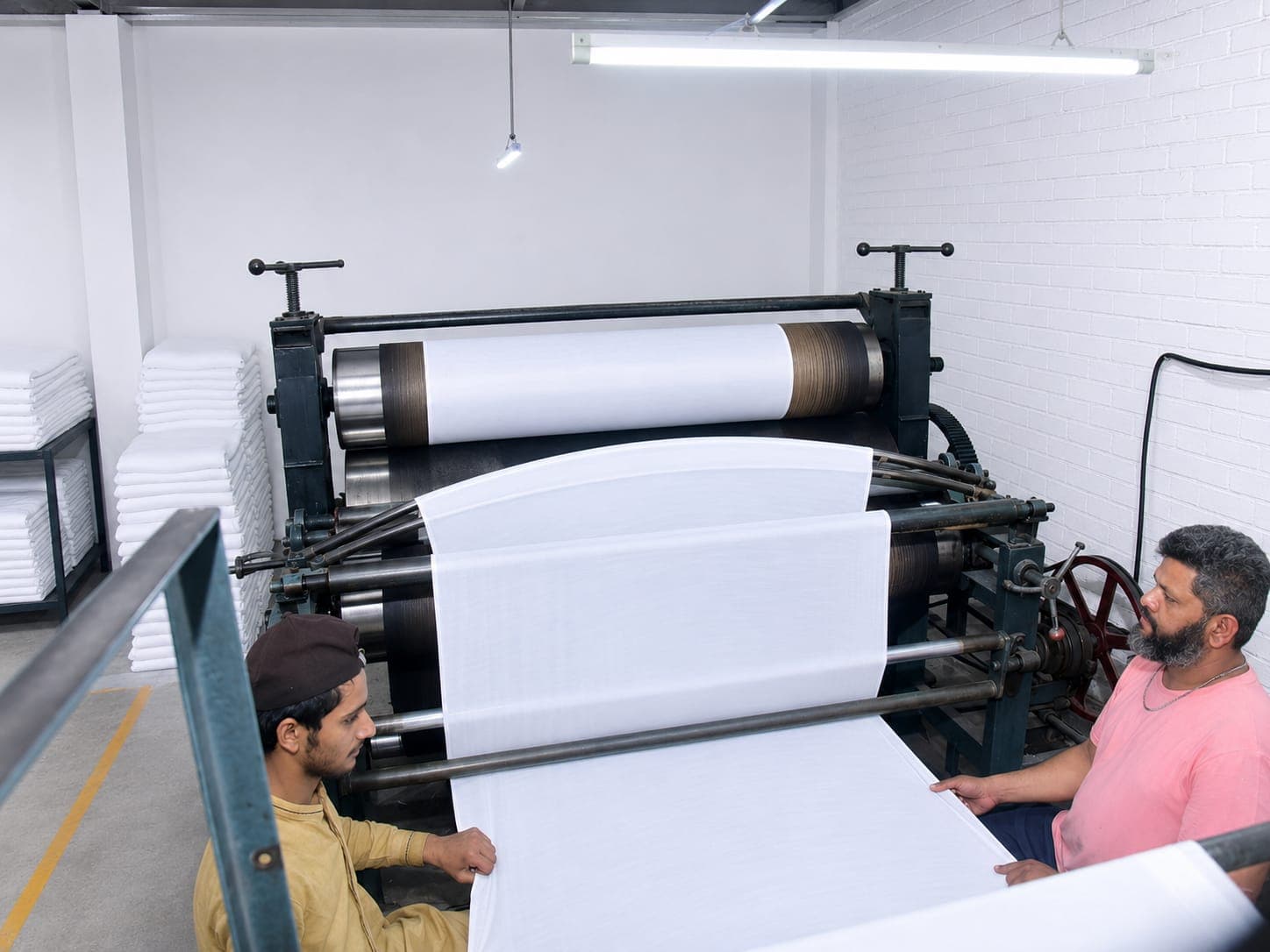
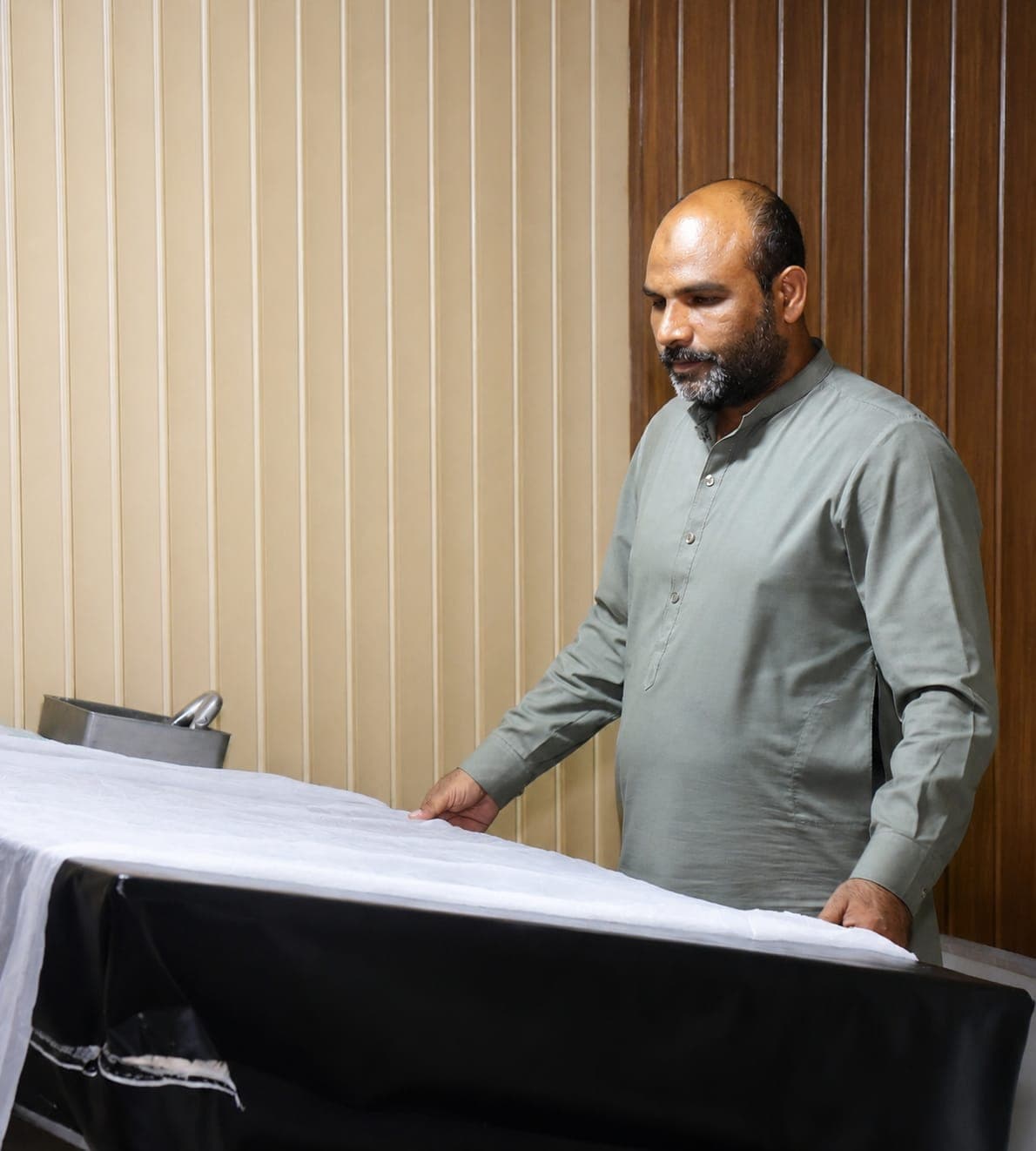
After weaving, the fabric is carefully checked for surface quality, weaving faults, stains, holes, thread lines, and finishing. This ensures clean and production-ready fabric.
Technical Execution
Every roll coming off the loom is inspected on a backlit checking table. Inspectors look for broken yarns, holes, oil stains, reed marks, weaving skips and width inconsistencies. Faults are marked with coloured flags; minor repairs are made on-site. Rolls above our acceptable defect threshold are pulled from the batch and reviewed before any decision to ship. This stage is the first gate before a roll earns the right to be called finished fabric.
Fabric Washing
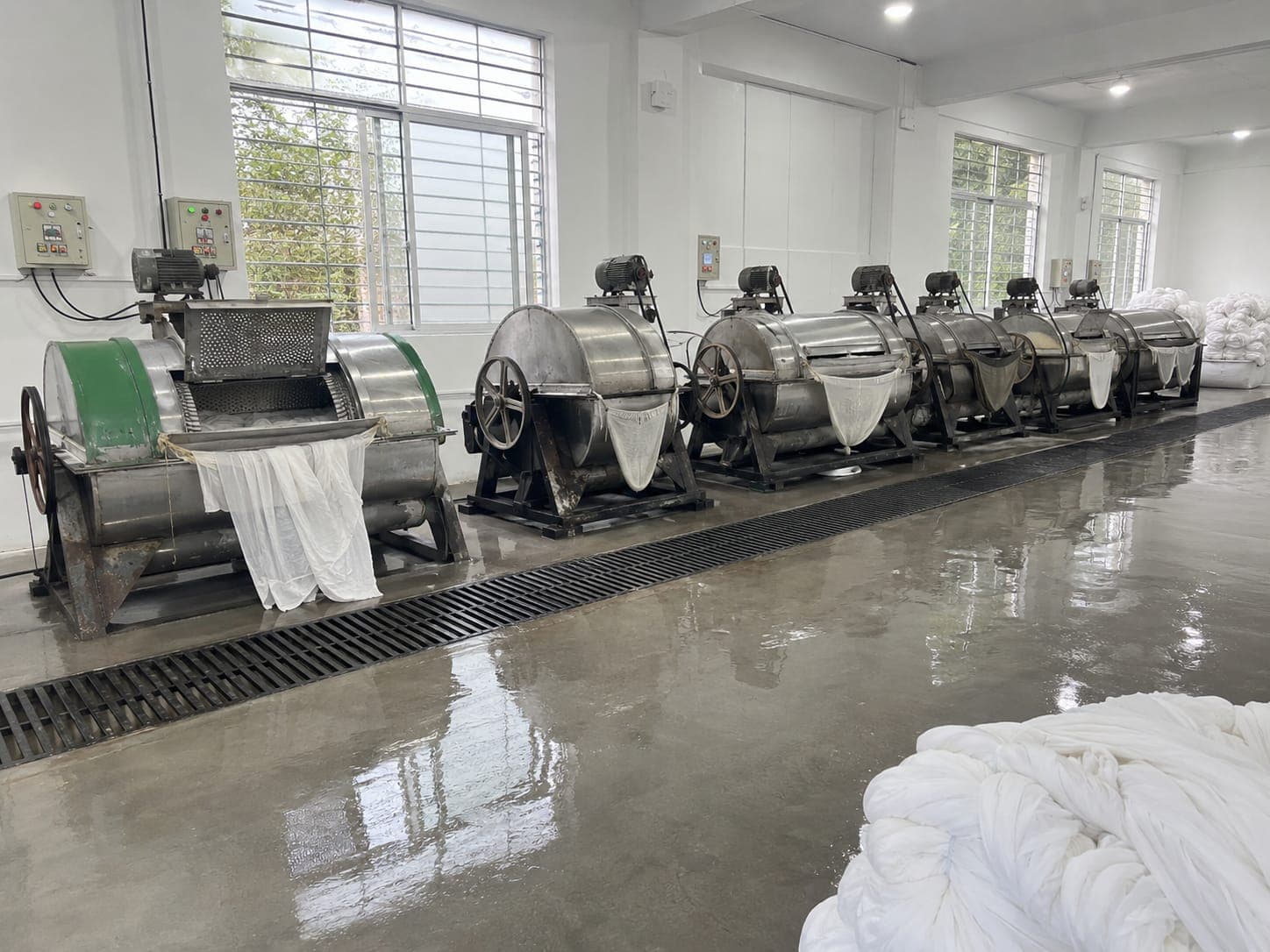
The checked fabric is washed to remove dust, oil marks, impurities, and processing particles. Washing improves fabric cleanliness, softness, and overall feel.
Technical Execution
Greige silk fabric carries sericin (the natural protein gum) and loom processing oils that affect its feel, absorbency and dye uptake. Our washing section uses controlled-temperature water baths with gentle detergent to remove these impurities without damaging the fibre. Fabrics are washed in batches, with water temperature and soak time adjusted per fabric type. After washing, the fabric is hydro-extracted and moved to the finishing line.
Fabric Calendering
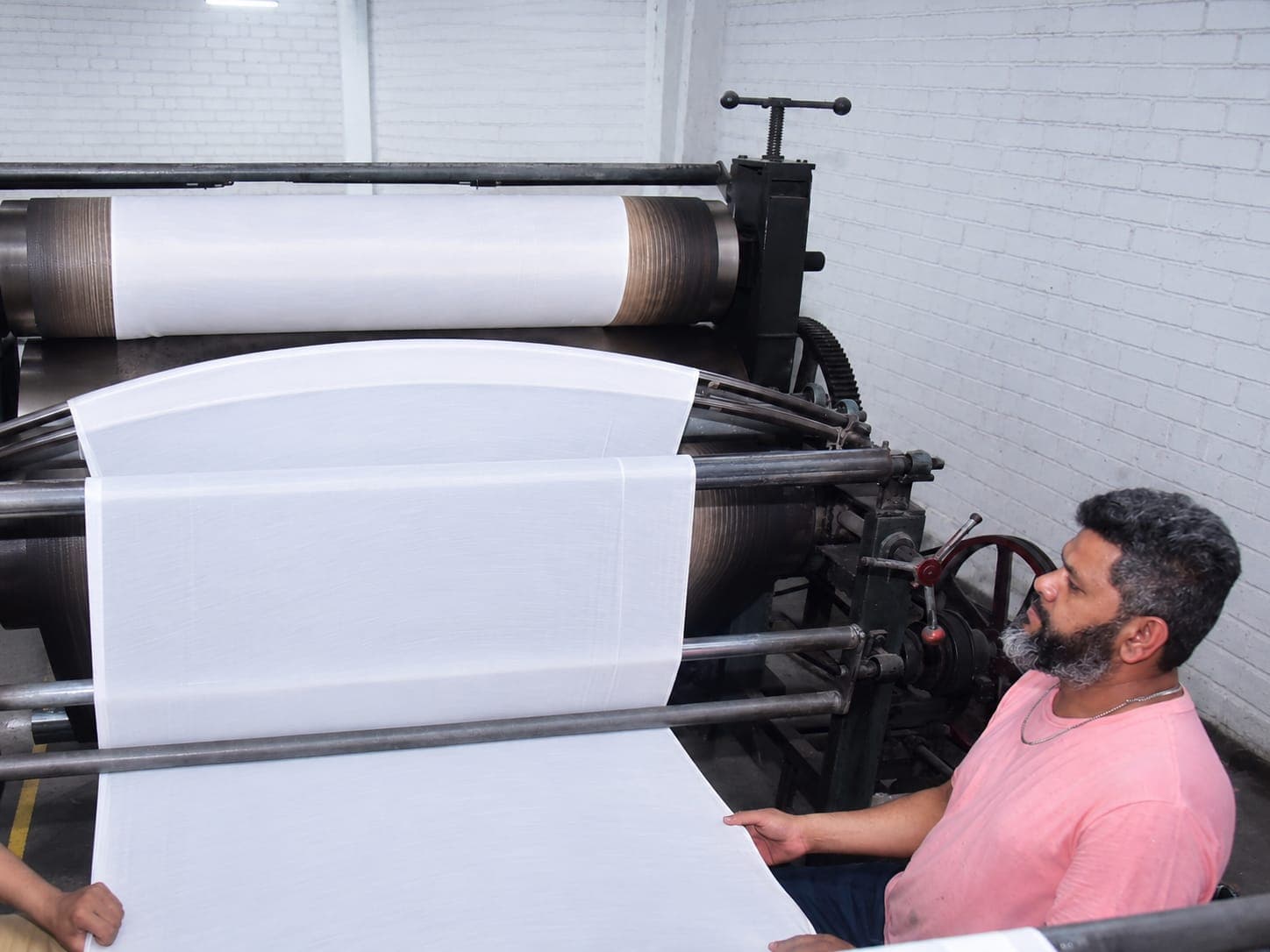
After washing, fabric is passed through calendering rollers to improve smoothness, fall, surface finish, and overall appearance.
Technical Execution
Calendering is the finishing press — fabric is passed between heavy heated rollers under controlled pressure and speed. The process compresses the weave structure, improves surface lustre, flattens loose fibres and sets the final hand feel. For white-base fabrics, calendering is critical because buyers need a smooth, even surface to achieve uniform dye uptake and sharp print registration. Our calendering machine allows adjustment of roller temperature, pressure and speed to produce different surface finishes on demand.
Have questions about our production process?
Our team can walk you through any stage and share samples from that step.